Last updated November 21, 2026
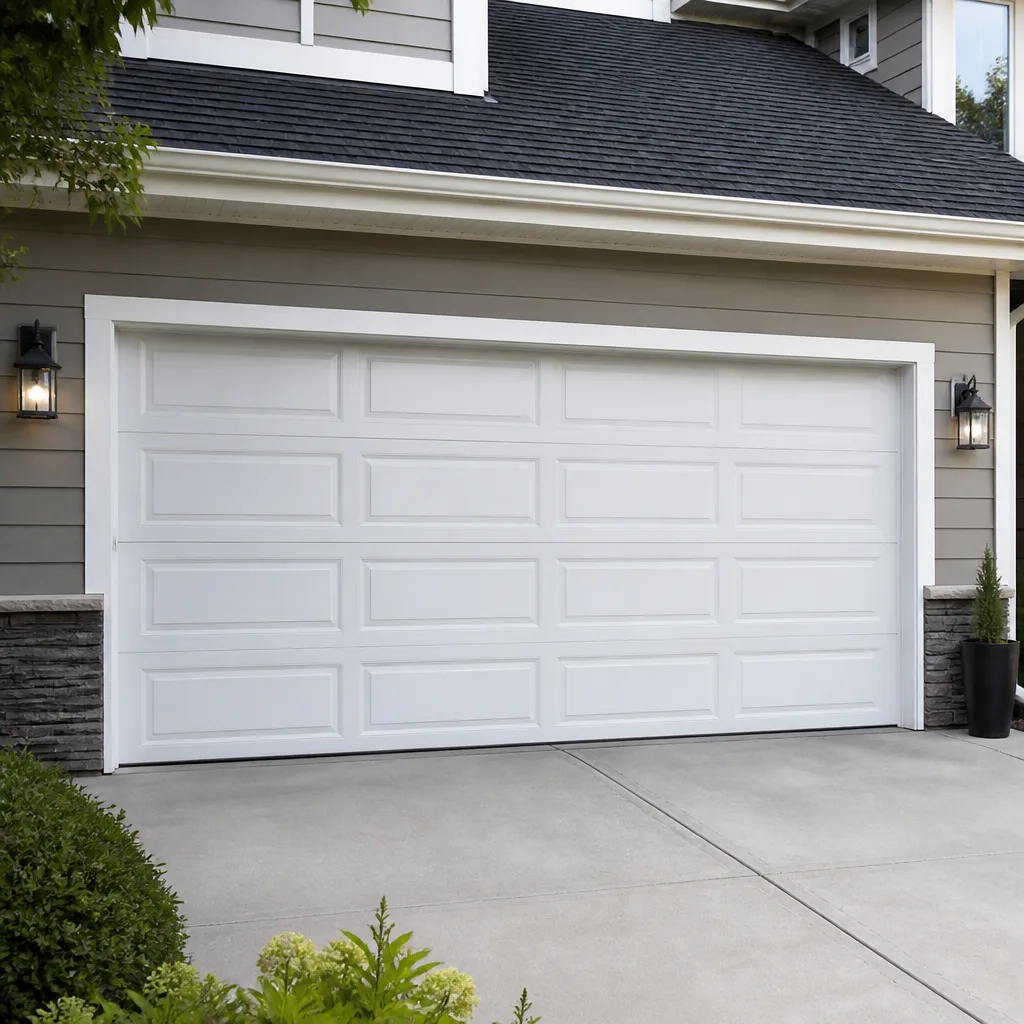 Raised-panel steel
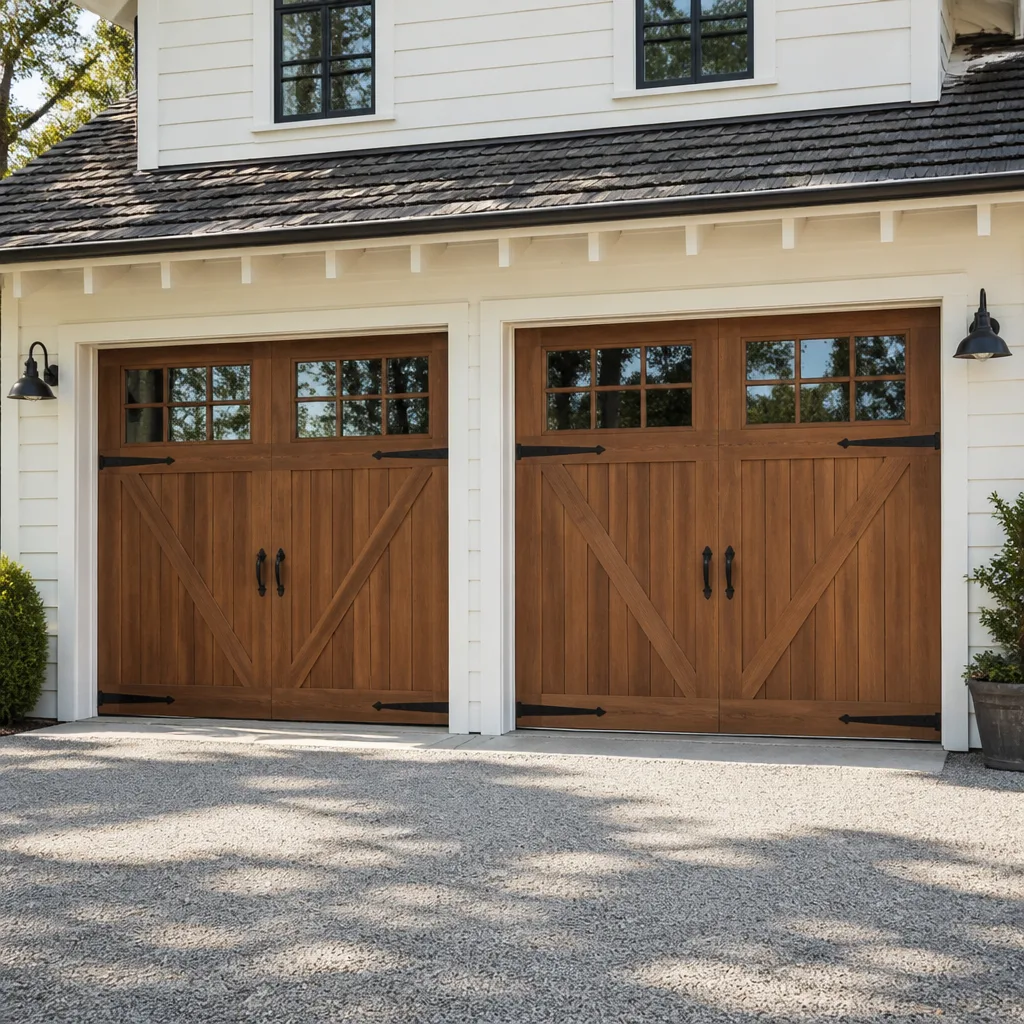 Carriage house
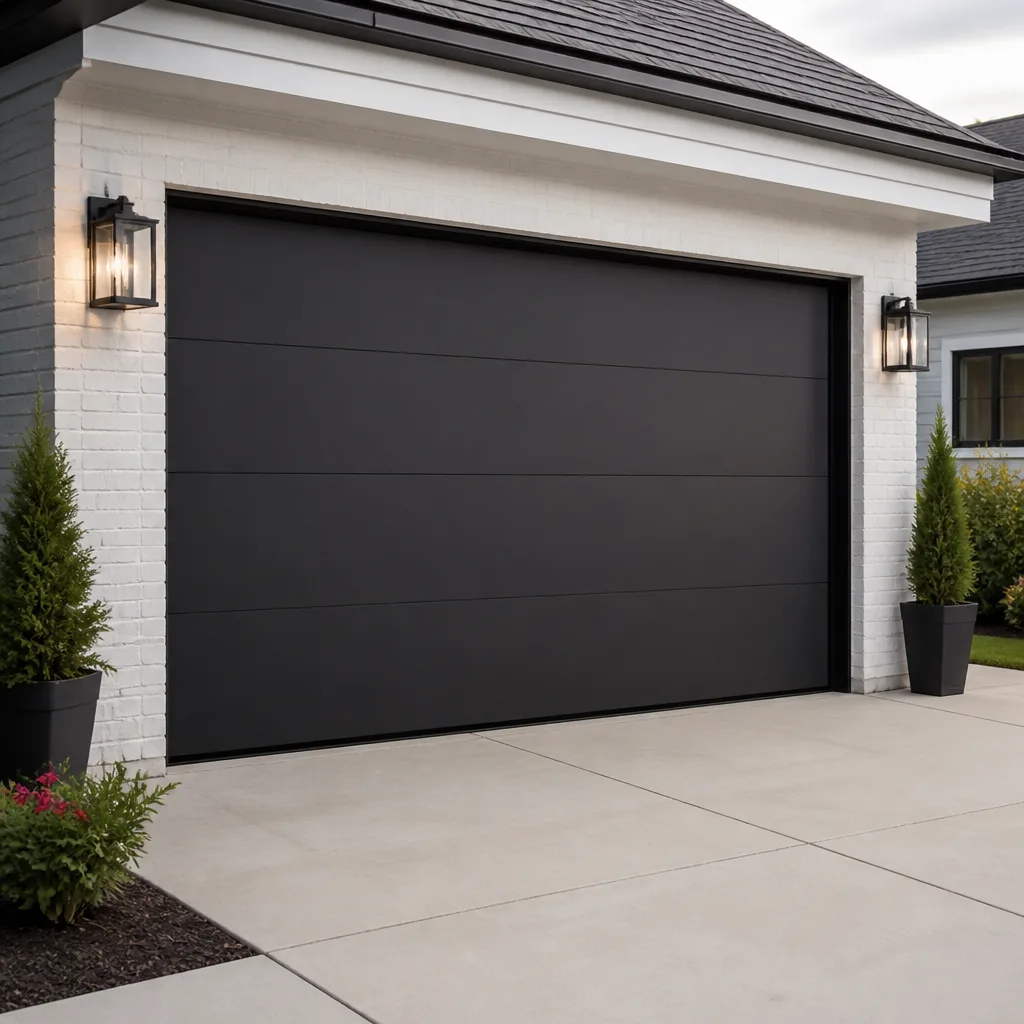 Modern flush
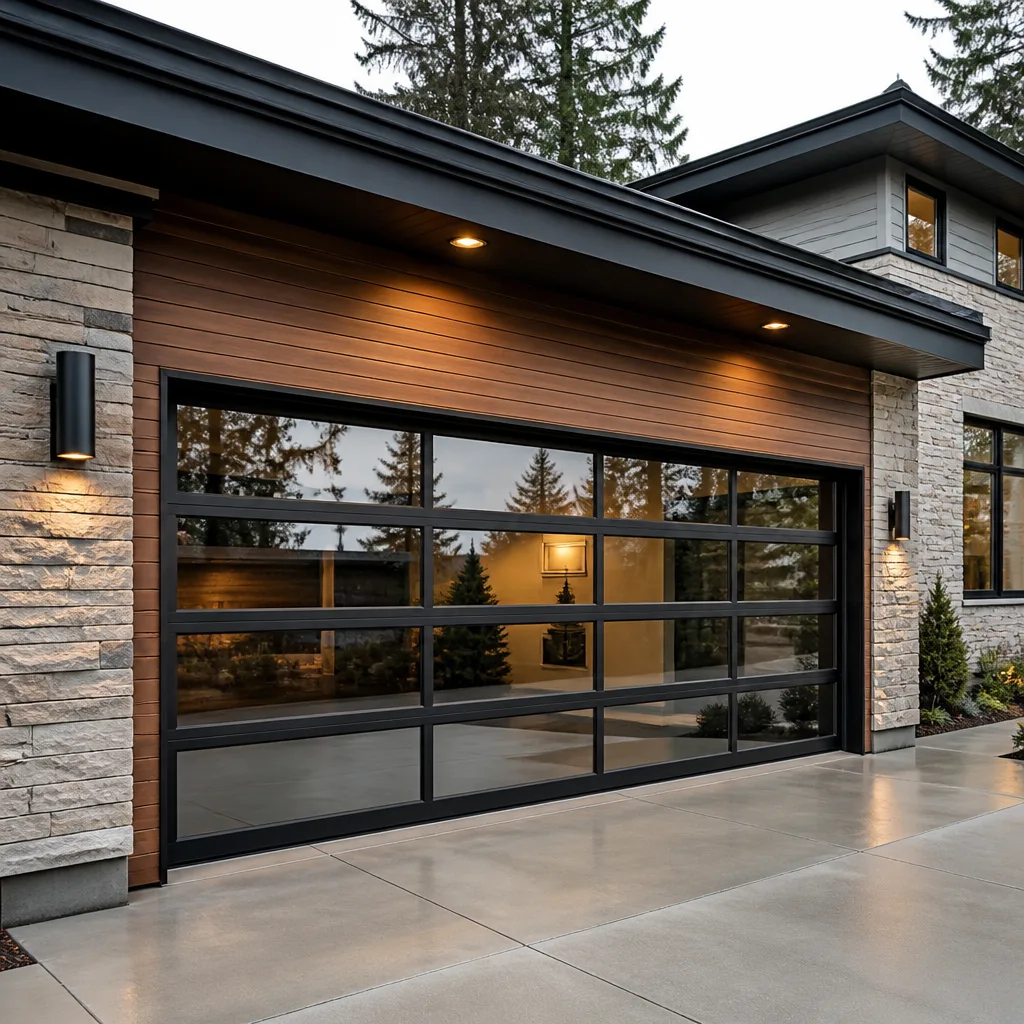 Full-view glass
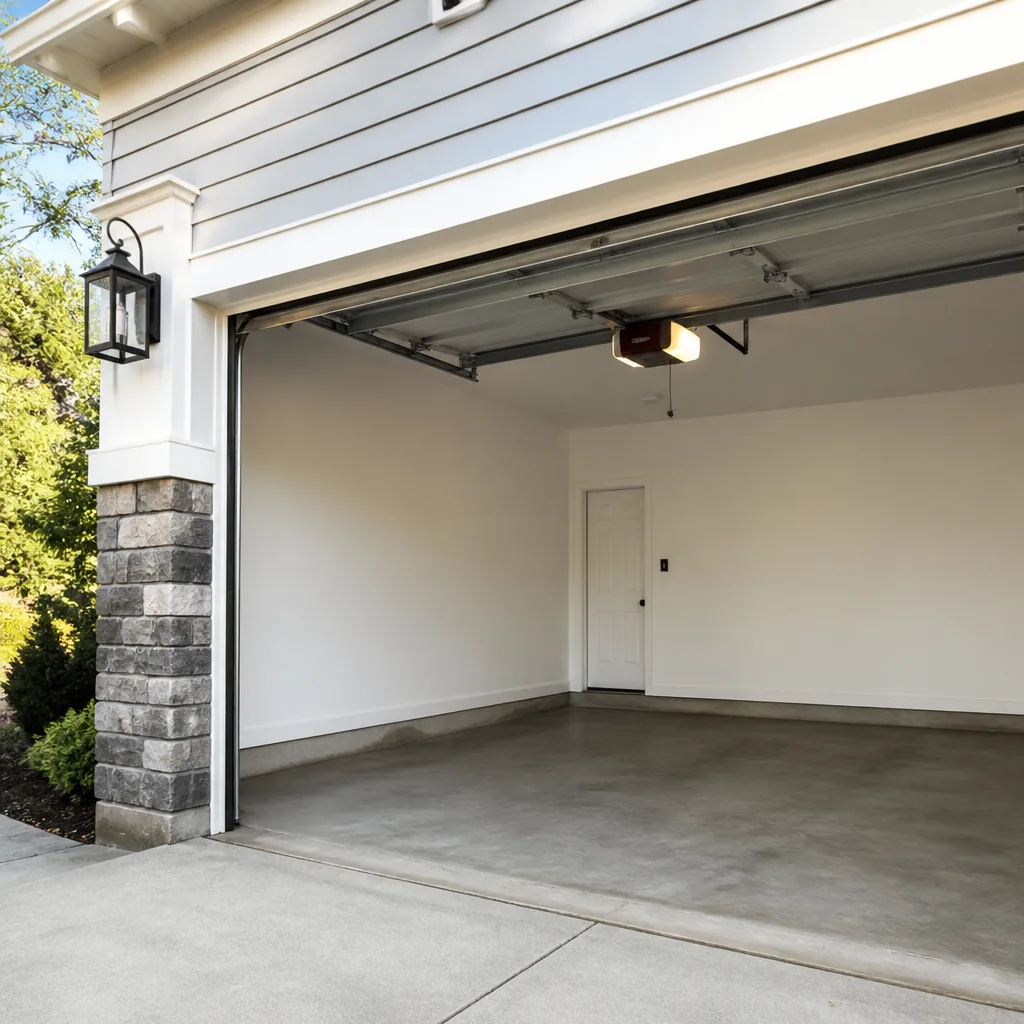 LiftMaster openers
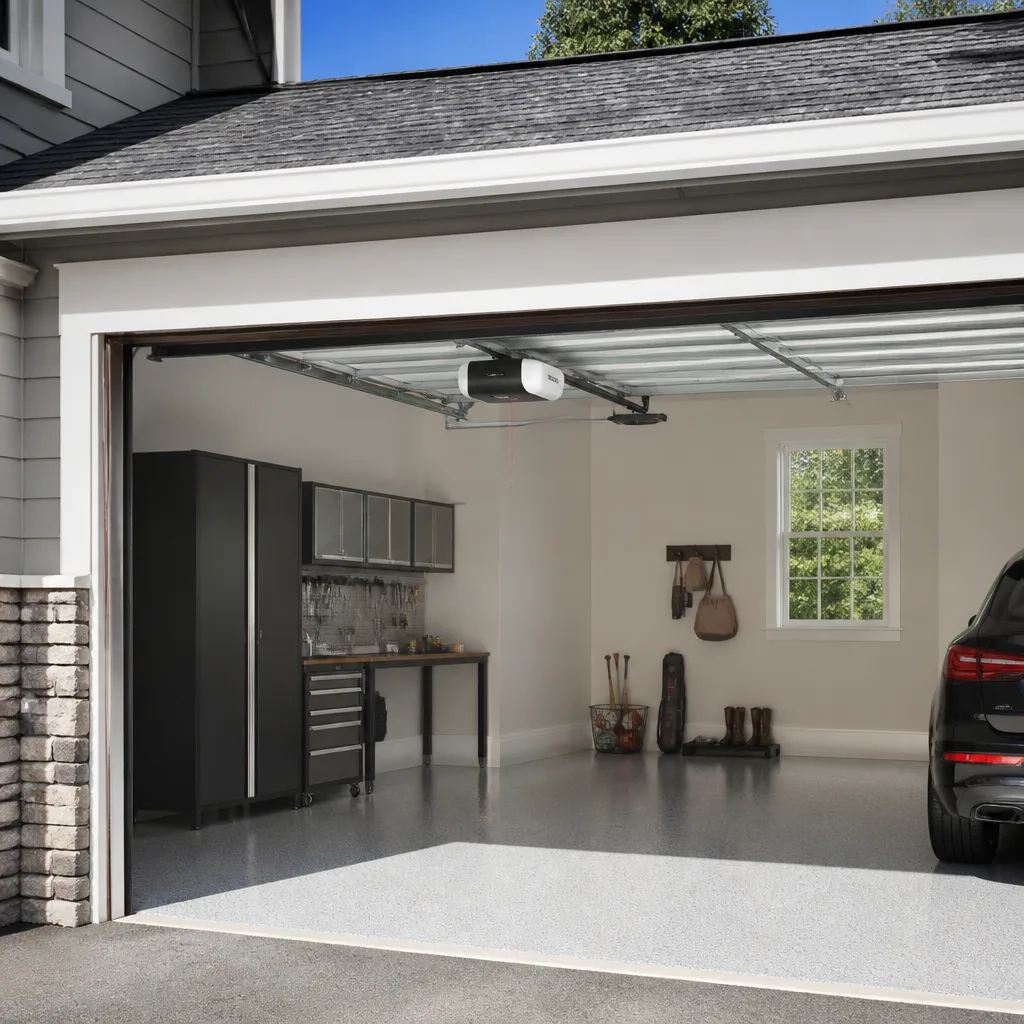 Chamberlain openers
Full 25-point door and opener safety check with every visit - springs, cables, rollers, tracks, and your LiftMaster or Chamberlain opener included
You get a price before we start. It does not change when the pro arrives.
Get your free estimateDIY vs Professional Garage Door: The Yonkers Homeowner’s Decision Guide
Most garage door advice online splits the world in two: change your own oil, fix your own door, be a homeowner. That framing is wrong, and it costs Yonkers homeowners money in both directions. The real dividing line isn’t confidence or YouTube familiarity. It’s the parts. A torsion spring stores enough energy to break a wrist, and no amount of determination changes that. Replacing a bottom seal or reprogramming a LiftMaster remote in your kitchen takes twenty minutes and a screwdriver. This guide draws the line task by task, explains the mechanical reason behind each classification, and shows you where the genuine cost comparison sits once you factor in time, risk, and the quiet way a small mistake compounds. If you’re weighing DIY garage door repair versus professional work in Yonkers, start here.
Quick Answer
Homeowners can safely handle weather seals, lubricant, track cleaning, photo-eye alignment, remote and keypad programming, and visual inspections. Anything involving torsion springs, extension springs, cables, drums, bottom-bracket plates, or the opener’s internal drive assembly belongs to a trained professional, because those components are under tension that can release instantly. A good rule for Yonkers homeowners: if a task requires you to take tension off the system or stand underneath the door’s weight, stop and call.
Styles & brands we work with
- Raised-panel steel
- Carriage house
- Modern flush
- Full-view glass
- LiftMaster openers
- Chamberlain openers
Table of Contents
- Why a Garage Door Is Not Like Other Home Repairs
- The Homeowner-Safe Task List
- The Professional-Only Task List
- Tools for Safe Homeowner Tasks vs. What a Pro Arrives With
- The Real Cost of DIY Mistakes in Yonkers
- When DIY Can Void a Manufacturer Warranty
- How to Run an Honest DIY vs. Pro Cost Comparison
- What Garage Door Work Costs in Yonkers
Why a Garage Door Is Not Like Other Home Repairs
A garage door is the largest moving object in a house. The average single-car door weighs well over a hundred pounds, and a double-car door can run more than twice that, all balanced on a spring system and lifted along a curved steel track. That balance is the point. The spring carries the weight so a small motor, or a person, can move the door with one hand. When that balance is lost, the door is no longer just heavy. It becomes something that can fold a section, snap a track, or drop without warning.
Yonkers makes this more acute than a lot of places. The city’s housing stock is older than most, and a large share of the two- and three-family homes and the single-family blocks in neighborhoods like Crestwood, Woodlawn, and Park Hill have garage doors that were installed decades ago and retrofitted with modern openers at some point. That means mismatched hardware: a 1990s Waye Dalton door riding on a newer LiftMaster opener, or an original Craftsman opener still driving a door whose springs were replaced once and not again. Mismatched systems don’t fail politely. They fail where the tolerances are tightest.
The weather matters too. Yonkers gets hot, humid summers and cold, wet winters, and a garage door expands in July and contracts in January. Steel sections flex, seals harden and crack, tracks go slightly out of plumb, and springs lose tension gradually. A door that felt fine in October can feel noticeably stiffer in February. None of that means the door is broken. It means the mechanical system is doing what metal does in a climate with real seasons. Understanding that makes the DIY-versus-pro decision easier, because you start from the right question: which parts am I qualified to touch, and which parts am I not? For anything in the second category, our team can walk you through what needs to happen, and our garage door repair service handles it from diagnosis through completion.
The Homeowner-Safe Task List
These are the jobs where a homeowner with basic tools and reasonable care can save real money and lose nothing in safety. They cover maintenance, adjustment, and programming. None of them require releasing stored tension, and none put you underneath the door’s unbalanced weight.
- Replacing the bottom weather seal. The rubber seal along the bottom of the door wears out from sun, ice, and repeated contact with the slab. A new seal slides into the door’s bottom retainer or glues on with adhesive, depending on the model. It’s a fix that pays for itself in drafts and water intrusion.
- Lubricating hinges, rollers, and the torsion bar bearings. A small amount of white lithium grease or a silicone-based garage door lubricant on the hinge pivots, rollers, and bearing plates quiets a rattling door and reduces wear. Do this every six months or so, and never over a hinge that has a worn bushing.
- Cleaning and adjusting the photo-eye sensors. The two safety sensors at the bottom of the tracks should both have a solid light. Wipe the lenses, check that both are aimed at each other, and realign if one has been knocked. A door that closes and then reverses is usually a sensor problem, not a mechanical one.
- Testing the door’s reversal safety feature. Place a 2×4 flat on the floor under the closing door; the door should reverse on contact. Do this test monthly. It takes two minutes and it’s the single most important routine check a homeowner can perform.
- Programming remotes and keypads. Adding a new remote, changing a code, or resetting a keypad on a LiftMaster, Chamberlain, Genie, or Craftsman opener is a homeowner job. The manual has the sequence, and the sequence is the whole trick.
- Visual inspection. Look at the door from inside and outside. You’re checking for frayed cables, springs with visible gaps or gaps opening between coils, bent sections, loose hinges, and tracks that have pulled away from the jamb. You’re not fixing anything. You’re spotting what needs a call.
- Cleaning the tracks. A dry cloth or mild soap removes buildup. Don’t lubricate the tracks themselves; grease in a channel attracts grit and the rollers start binding.
That’s the honest list. If a task is on it, do it, and don’t feel you need a service call for it. If it’s not, read on.
The Professional-Only Task List
These are the jobs where the mechanical reason matters more than the difficulty. Each entry below explains why it belongs to a trained technician.
- Torsion spring replacement and adjustment. Torsion springs carry the door’s weight by winding around a steel shaft above the door. A standard residential spring is wound dozens of times during installation, and that stored energy is enormous. Releasing it requires winding bars used with deliberate care, and a spring that lets go can break a wrist or worse. We won’t pretend this is a “be careful” task. It’s a “call someone” task.
- Extension spring replacement. Extension springs run alongside the horizontal tracks. They’re lower energy than torsion springs but under real tension, and a failing extension spring can whip a cable with force. They also need safety cables installed if they don’t already have them, which is a professional retrofit.
- Cable replacement, drum, and bottom bracket work. The cables connect the bottom of the door to the drums on the torsion shaft. They’re under load from both the spring and the door’s weight. A bottom bracket plate that’s been loosened can whip violently the moment the cable has slack. If a cable has snapped, the door should not be operated at all until a professional has assessed it. Our garage door repair team treats a snapped cable as an urgent call, and so should you.
- Track realignment and re-hanging the door. Tracks bow, come out of plumb, or get bent by the door hitting them. Realigning a track is more involved than the visible part suggests, because the door’s entire balance depends on the track being correct. A door re-hung badly will bind, wear, and eventually throw a cable.
- Opener drive assembly and logic board repair. Openers are electrical equipment. The drive train, logic board, capacitors, and motor windings require diagnosis and, often, safety-rated replacement parts. Genie and LiftMaster openers have internal systems that aren’t accessible to a homeowner without opening a live electrical enclosure. Our garage door opener repair covers legacy units and smart-home openers across all the major brands for exactly this reason.
- Full door and section replacement. A panel replacement sounds straightforward until you’re dealing with a door whose springs were tensioned for the original panel weight. Changing a section and leaving the spring system alone will make the door run badly, and the same goes for replacing a whole door on a reused opener. Our garage door installation handles the door, the tracks, and the spring system as one unit so the balance is right from the first day.
If you’re unsure which side of the line a task sits on, the safe move is to call and ask. We’d rather tell you to do something yourself than have you attempt something you shouldn’t.
Tools for Safe Homeowner Tasks vs. What a Pro Arrives With
The tool list is where the DIY-versus-pro distinction becomes visible. Compare what you’ll use for the homeowner-safe tasks against what a technician actually needs to do the rest.
What a homeowner needs for the safe tasks
- A flathead screwdriver for photo-eye and sensor adjustment
- A Phillips screwdriver for hinge and retainer screws
- A small adjustable wrench or a socket set for hinge bolts
- White lithium grease or silicone-based garage door lubricant
- A clean cloth and a bottle of mild soap solution
- Replacement weather seal sized for your door’s retainer
- A 2×4 offcut for the reversal test
- Your opener’s manual, or the model number so you can find the programming sequence
What a technician arrives with
- Torsion winding bars (matched to the spring’s winding cone, in pairs)
- Cable drums and a full set of cables sized to the door’s height and weight
- Charged spring sets in the correct wire gauge and inside diameter for the door’s weight
- Bottom bracket plates and safety-retention components
- Track brackets, jamb brackets, and roller assemblies
- Torque wrench, tension gauge, and safety glasses
- Opener diagnostic tools, replacement logic boards, and safety-rated drive parts
The winding bars alone are the giveaway. A set of winding bars costs relatively little, but owning the tool doesn’t mean you own the knowledge of how much tension is on a spring and where to stand while you release it. That’s the point the tool list makes. The work isn’t hard because professionals have better tools. It’s hard because the tools are for releasing stored energy safely, and the skill is in knowing when that energy will bite.
The Real Cost of DIY Mistakes in Yonkers
The most common miscalculation we see in Yonkers is treating the small repairs as the risk and the cost. A homeowner wants to save money on a $90 weather seal replacement, gets the wrong seal size, forces it into the retainer, and pulls the retainer out of the door’s bottom section. That’s a $90 job turning into a bottom section replacement, or a bent cable, or both. The dollar figure isn’t the point. The pattern is.
There are other compounding errors. Loosening a bottom bracket while trying to replace a cable, and letting the tensioned plate release. Forcing a track back into plumb with the door attached, twisting the track, and losing the door’s alignment. Trying to replace a torsion spring with a spring from a hardware store that doesn’t match the door’s weight, then discovering the door won’t balance, the opener strains, and the whole system has to be redone by a professional who now has to undo the botched work first. Every one of these started with a task that looked smaller than it was.
There’s also a security cost worth naming, especially in Yonkers, where the garage is often the primary entry point to a house or to a driveway that leads to a rear door. A door left half-open because the opener is failing, or a photo-eye that’s been defeated because someone didn’t want to deal with it, is a real security gap. It doesn’t announce itself as one. It just stays like that for weeks until a neighbor mentions it.
If you’re already in the middle of a DIY attempt that went sideways, the most expensive thing you can do is keep going. Call, describe what you did, and let a professional evaluate it. There’s no judgment in that call. There’s just a lot of money to be saved by stopping earlier instead of later.
When DIY Can Void a Manufacturer Warranty
Manufacturer warranties on garage door openers are specific about what voiding looks like, and the big brands share the same general categories. If you open the housing of a LiftMaster, Chamberlain, Genie, Craftsman, Raynor, or any other branded opener, you’re in territory the warranty doesn’t cover. If you replace the logic board or drive gears with aftermarket parts that aren’t the manufacturer’s, that’s the same. If you modify the wiring, splice the safety sensor harness, or bypass the photo-eye circuit because it kept tripping, that’s the kind of modification that can end a warranty outright, and it’s also the kind of modification that creates a real safety problem.
Door warranties work differently. Doors from Amarr, Wayne Dalton, and other manufacturers typically cover the door’s structure and finish, and they don’t care who installed the door as long as it was installed correctly. But if a homeowner forces a panel into a track, warps a section while trying to reseat it, or installs a door themselves and gets the spring balance wrong, the manufacturer will call that installation damage, not a defect. The warranty won’t pay out. What a professional installation gives you is a record that the door was correctly installed, which is what a warranty claim needs if a defect actually shows up.
The warranty question matters most on openers, and it matters more on newer smart-home openers than older ones. A modern Chamberlain or LiftMaster unit with integrated smart features has firmware and sensor systems that are easy to disturb. That’s why garage door opener repair is a specialty on its own, not a side task of door repair. When in doubt, read the warranty booklet before you touch anything. If the manual says a task requires a qualified technician, that’s the wording that matters later.
How to Run an Honest DIY vs. Pro Cost Comparison
The way most people compare DIY and pro is: part price versus service price. That comparison is almost always wrong, because it leaves out three things that matter. Here’s a fairer method.
- Add up the total part cost, including the mistakes. If a job has a 25% chance of needing a second part because your first attempt was wrong, the honest part cost is 1.25x, not 1x. Weather seals and remote batteries are low-risk purchases. Springs and cables are not.
- Assign a real value to your time. A weather seal is 45 minutes. A spring replacement, if you had the tools and knew what you were doing, would be two to three hours. But add the trip to the hardware store, the YouTube hours, and the second trip for the part you got wrong. That’s the realistic number.
- Estimate the downside case. For a homeowner-safe task, the downside case is usually a wasted part. For a professional-only task, the downside case is an injury or a repair that costs several times the original job. If the downside is more than you can absorb without real financial pain, the job isn’t a DIY job regardless of the math.
- Get a written estimate for comparison. A written estimate is a real number, and it makes the comparison honest. Without it, you’re comparing your imagined service cost to your imagined DIY success. Neither of those numbers exists. The estimate does.
- Compare not just the cost but the outcome. A professional repair ends with a working door, a tested system, and someone to call if it isn’t right. A DIY repair ends with a working door if everything went well, and no coverage if it didn’t.
Do the math this way and the DIY-versus-pro decision becomes clearer. Some jobs save you real money by doing them yourself. Some don’t, once you account for the parts, time, and risk. The professional call isn’t automatically the right answer. It’s often the right answer, and it’s up to you to know which is which on any given task. If the answer isn’t obvious after running through this list, calling for an estimate costs you nothing and removes the guesswork.
What Garage Door Work Costs in Yonkers
Here’s the part most guides leave out: what the work actually costs. The ranges below are typical for the Yonkers market and reflect the range of what we see quoted for standard residential work. They’re estimates, not final numbers. Your written estimate sets the price, and no work starts until you’ve agreed to it.
| Task | Typical Yonkers Range | Who Should Do It |
|---|---|---|
| Weather seal replacement (bottom) | Under $150 including parts | Homeowner-safe |
| Photo-eye realignment or replacement | Under $180 | Homeowner-safe for alignment; professional for sensor replacement wiring |
| Roller, hinge, and tune-up service | $150 to $250 | Homeowner can lubricate; professionals adjust |
| Single torsion spring replacement | $180 to $340 for one spring | Professional only |
| Matched pair of torsion springs (commonly replaced together) | $360 to $680 for the pair | Professional only |
| Cable replacement | $190 to $380 per side | Professional only |
| Opener repair (board, drive, or motor) | $180 to $450 depending on parts | Professional only |
| New opener installation | $400 to $850 depending on features | Professional only |
| Full door installation | $1,200 to $3,800 depending on door, size, and opener | Professional only |
A note on springs, because this is where the biggest misunderstanding lives. One spring is one spring. A pair is priced roughly twice one spring, and most doors with two springs sized to the door’s weight should have both springs replaced when one fails, because the second spring is on the same clock. If a quote looks suspiciously cheap for a spring replacement, check whether it’s one spring or a pair. The written estimate should be specific.
If you’re in Yonkers, you’re also paying for the practical reality of local drive time and the occasional tight garage. Many of the older detached garages around Yonkers have low ceilings, awkward approaches, or doors that were installed before the modern standard, and a technician who shows up expecting a straight two-car garage setup will need to handle those conditions. We don’t upcharge for tight work, but a written estimate that reflects the actual job is the only honest way to quote it. On urgent calls, our emergency service exists for the situations that can’t wait: a door stuck open, a door that won’t close, or a snapped cable that has left the door unsafe to operate.
Common Mistakes to Avoid
- Treating a torsion spring as a “watch the video” task. Torsion springs are the most dangerous component in a garage door, and the video you’ll find usually shows the process without the safety setup the video’s creator actually used. Skip this category entirely and put the phone number on the fridge.
- Replacing one spring when the door has two. A pair of springs is sized to carry the door’s weight together, and the second spring is on the same cycle count as the first. Replacing only one leaves the door unbalanced, and the older spring usually fails within months.
- Lubricating the tracks. The tracks are guides, not bearings. Grease in a track collects grit and the door starts to bind. Lubricate the hinges, rollers, and bearing plates instead.
- Bypassing a photo-eye sensor that keeps tripping. The sensor is a safety device, and defeating it is the one adjustment that has no acceptable version. Fix the sensor, replace the sensor, or call someone who can. Don’t zip-tie it, tape it, or disconnect it.
- Opening the opener housing without the warranty in mind. Opening a LiftMaster, Chamberlain, Genie, or Craftsman unit for anything beyond a battery change can end the warranty, and it puts you inside a live electrical enclosure. Opener repair is a professional call for exactly these reasons.
- Buying a spring by dimension alone from a hardware store. Springs are matched to the door’s weight, not just its size, and the wire gauge, inside diameter, and length all matter together. A spring that fits but doesn’t match will overload the opener and wear out in months.
- Waiting on a bent track. A slightly bent track feels like a minor annoyance until the door jumps the track and hangs. Tracks don’t straighten themselves, and adjusting a track is more involved than it looks.
See the difference
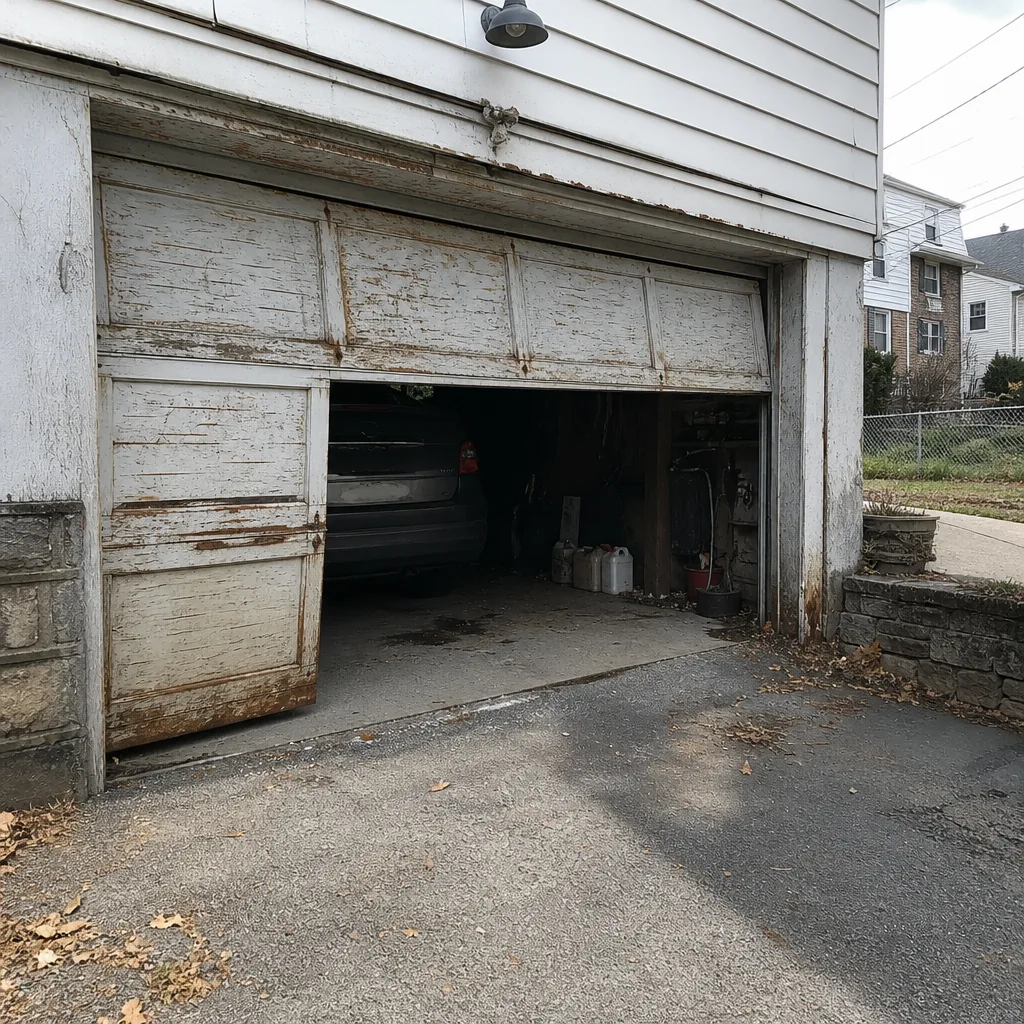 Before
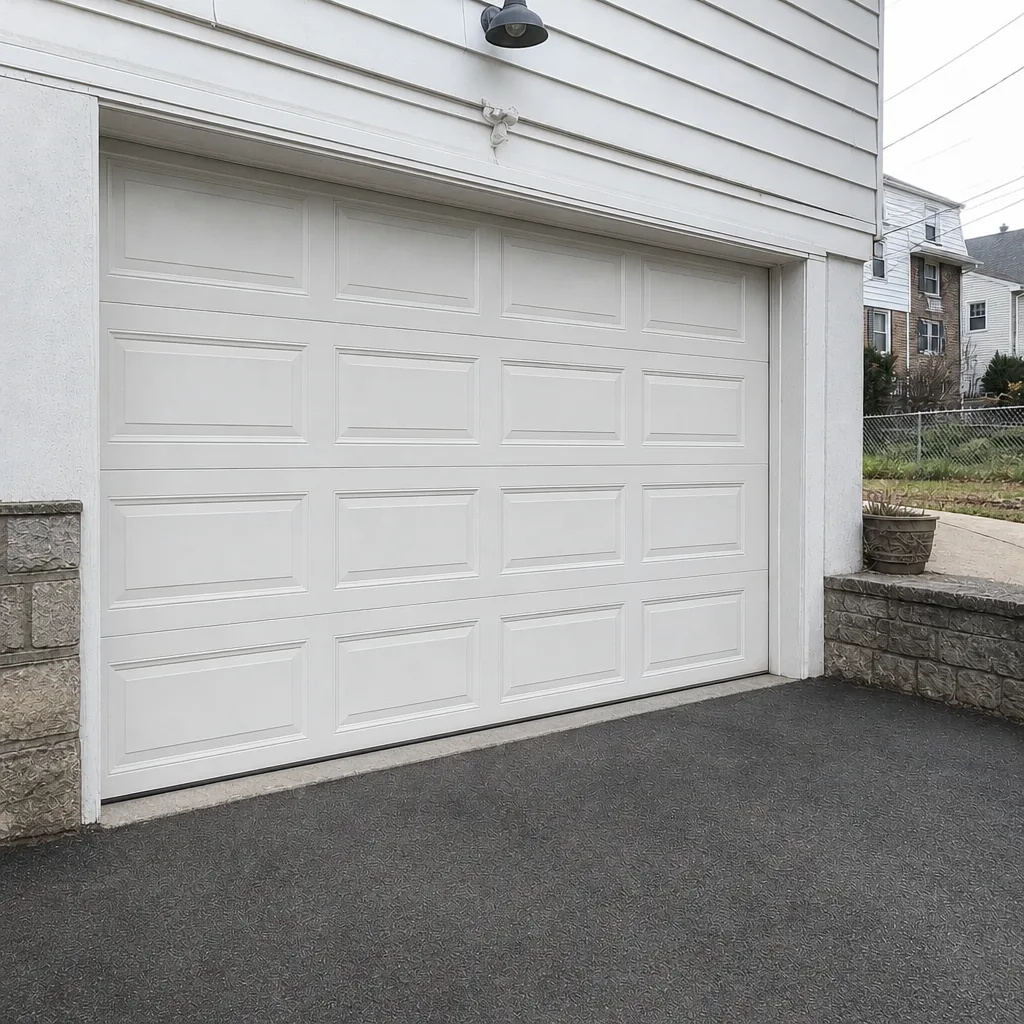 After
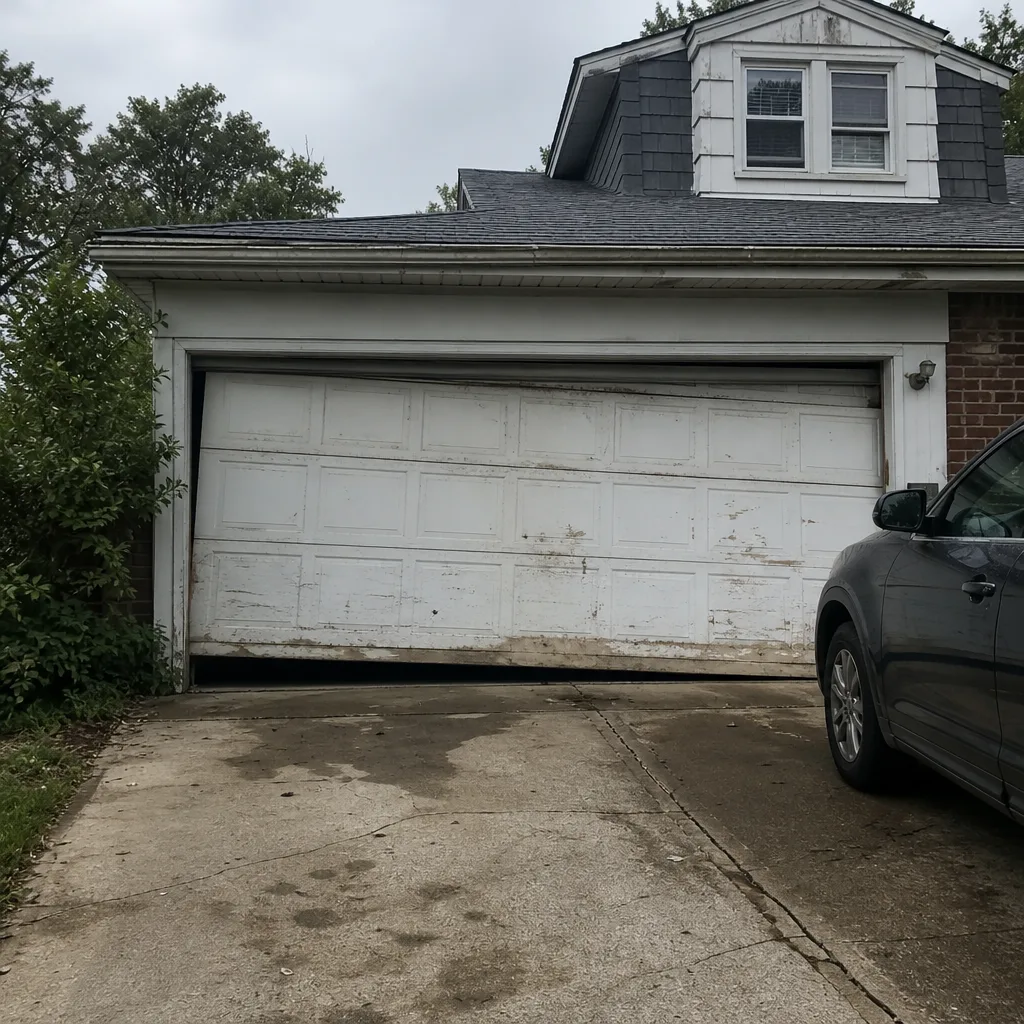 Before
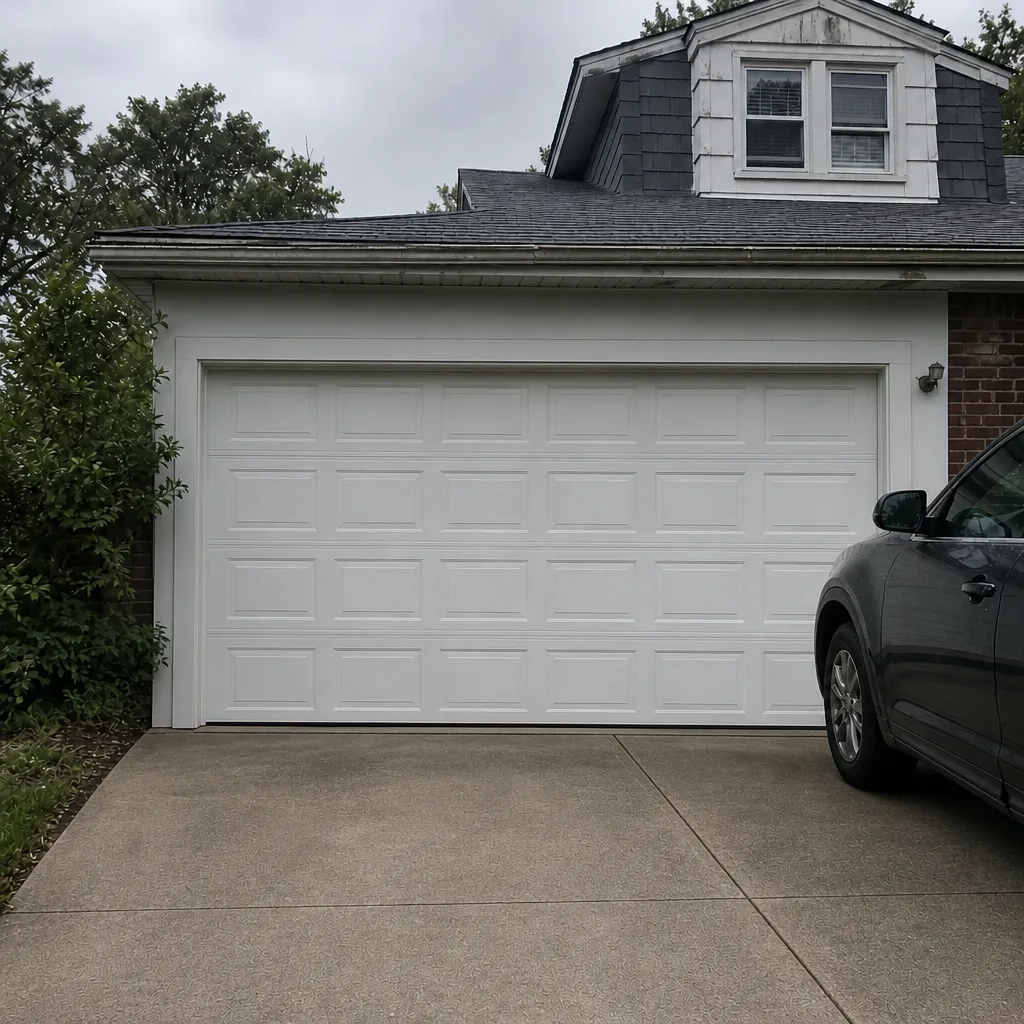 After
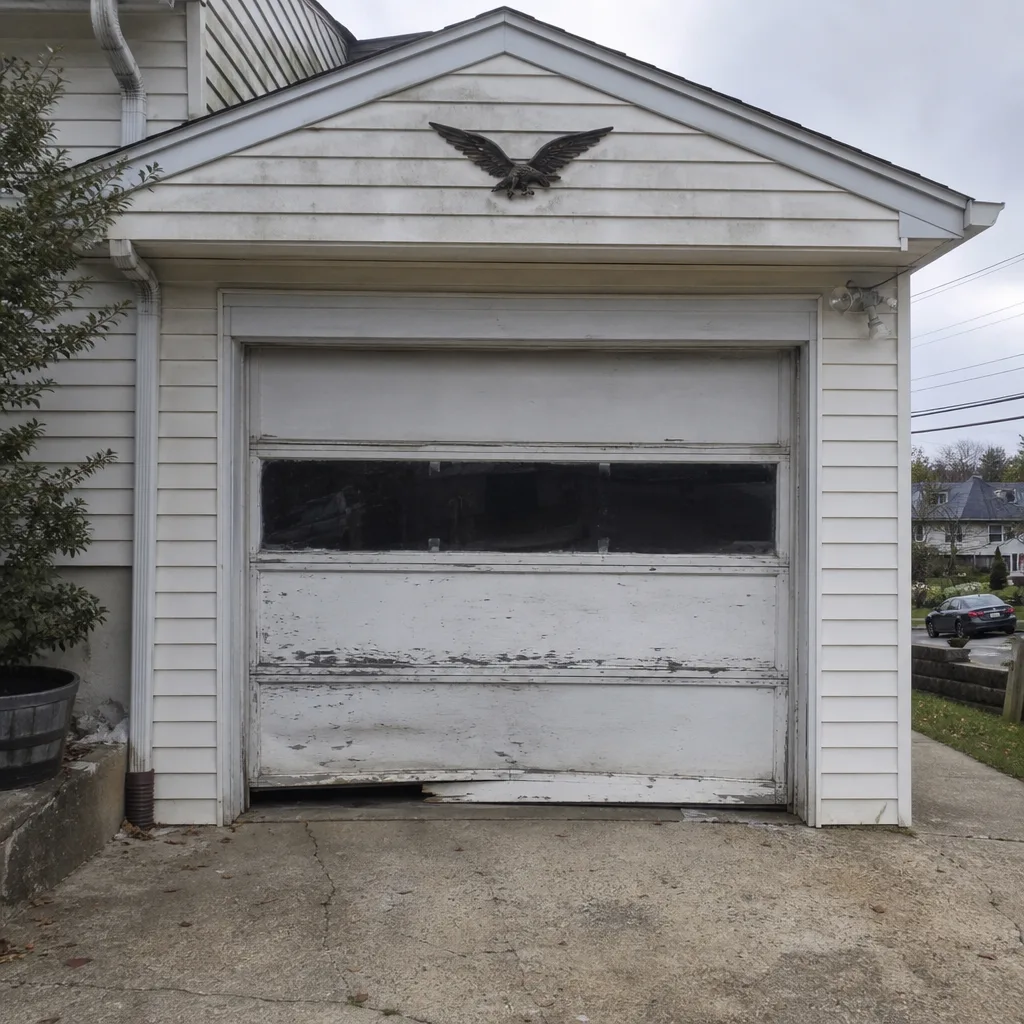 Before
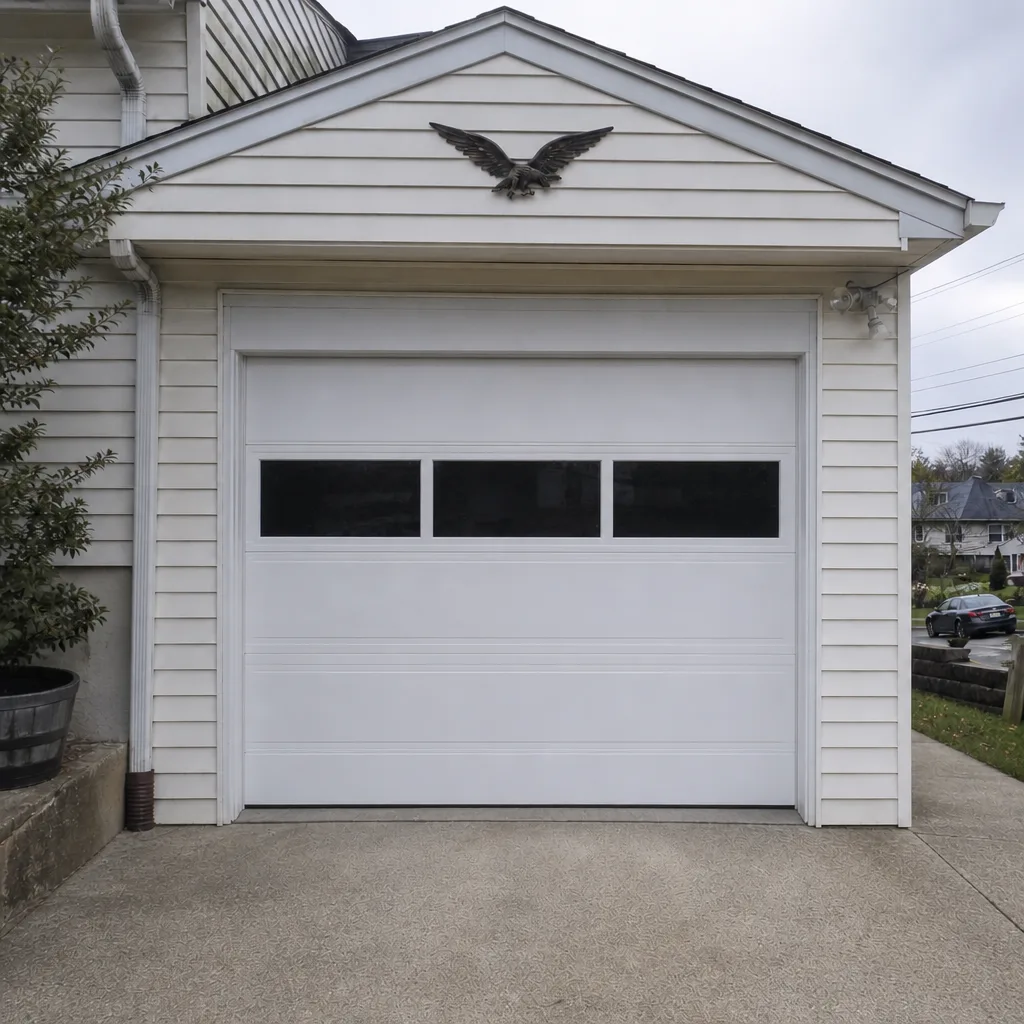 After
When to Call a Professional
Call a professional the moment any task on our professional-only list is in front of you, and don’t wait for a convenient week. Call specifically if you hear a loud bang from the garage and the door won’t lift, if a cable has visibly snapped or is hanging slack, if the door is crooked in the frame, if the opener runs but the door doesn’t move, if the door reverses on its own, or if you’ve made a DIY attempt and it didn’t fully resolve. Each of those situations involves stored tension, a live electrical component, or a door that’s no longer balanced, and none of them are worth a second attempt with more determination.
Yonkers Garage Door Repair Pros offers free estimates in Yonkers, and our technicians have up to 10 years of experience working on whatever brand you have, including Amarr, Wayne Dalton, Craftsman, and Raynor systems. Call (877) 492-2580 and we’ll schedule a visit at a time that works for you.
Frequently Asked Questions
No. Torsion and extension springs store enough energy to cause serious injury, and replacing one requires tools and knowledge most homeowners don’t have, including a matched spring sized to the door’s weight. This is the single most important DIY-versus-pro line in the garage door world. Call (877) 492-2580 for a free estimate on spring repair; estimates are free and the price is agreed before any work starts.
Weather seal replacement, lubricating hinges and rollers, cleaning the tracks, adjusting or cleaning the photo-eye sensors, testing the door’s reversal feature, programming remotes and keypads, and visual inspections. None of those require releasing stored tension or working inside the opener. Everything else is a professional call.
Opening the housing of a modern LiftMaster or Chamberlain can void the warranty, and the same is true of Genie and Craftsman units, and it also puts you inside a live electrical enclosure. Manufacturers expect qualified technicians to do that work. If an opener is failing, call for a repair estimate rather than opening the case. Call (877) 492-2580 for an exact quote; estimates are free.
Typical Yonkers garage door repair ranges from about $150 for a tune-up to $340 for a single spring replacement, with a matched spring pair ranging from $360 to $680, and opener repairs ranging from $180 to $450 depending on the part. Cable replacement generally runs $190 to $380 per side. These are estimates. A written estimate sets the price, and we quote and agree to it before work begins. Call (877) 492-2580 for a free estimate.
No, if we’ve provided a written estimate. The written estimate is the price. If a technician discovers something the estimate couldn’t have accounted for, that becomes a separate conversation before any additional work starts, and you decide whether to proceed. We don’t do surprise invoices. Call (877) 492-2580 to set up a free estimate.
The local professional who performs the work is licensed and insured as their state requires. Our team connects you with the vetted professional best suited to the job. Yonkers Garage Door Repair Pros serves as a single point of contact from diagnosis through completion, without subcontracting you to a separate brand dealer. Call (877) 492-2580 for a free estimate.
The Bottom Line
The garage door DIY division isn’t about skill. It’s about parts. Seals, lubrication, sensor alignment, remote programming, and visual inspections are homeowner work. Springs, cables, drums, bottom brackets, tracks, and opener internals are professional work, because they involve stored tension or live electrical components. Once you draw that line, the cost comparison starts to make sense, and you stop overspending on small jobs you could have done and stop taking real risks on the ones you shouldn’t. If a task sits anywhere near the line, call and ask. We’re happy to tell you to do it yourself when that’s the right answer.
Yonkers Garage Door Repair Pros works on whatever brand is already on your door or opener, including LiftMaster, Chamberlain, Genie, Clopay, Amarr, Wayne Dalton, Craftsman, and Raynor. Our techs have up to 10 years of experience. For any task on the professional side of the line, or any door that isn’t behaving the way it used to, our Yonkers Garage Door Repair Pros team is ready to help. We offer free estimates across Yonkers and the surrounding area. Call (877) 492-2580 today and we’ll get you scheduled at a time that works for you. Whether you want spring repair, opener service, or a garage door installation for a door that’s reached the end of its run, we handle it under one call.
Written by the team at Yonkers Garage Door Repair Pros.